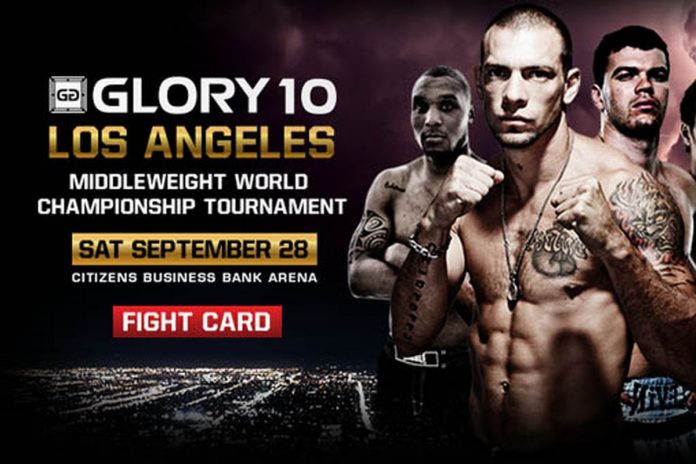
It feels like a great weight lifted off of my shoulders that GLORY have finally gone ahead and announced that GLORY 10 will be in Los Angeles, California (or at least in the area of Los Angeles). GLORY 10 will feature a one-night, four man Middleweight tournament with four of the best in the business going toe-to-toe. It is Joe Schilling, Artem Levin, Steven Wakeling and Jason Wilnis competing for being called the GLORY Middleweight Champion.
On top of that is the main event which is Jerome Le Banner vs. Sergei Kharitonov as well as a Super Fight between Robin Van Roosmalen and Shemsi Beqiri. There will be much more announced soon for the card.
It takes place September 28th at the Citizen’s Bank Arena in Ontario, California.
Heavyweight Title Headline Bout: Rico Verhoeven (R5 – Dec) Guto Inocente – The first two rounds saw Guto try, but really not gain much traction against the champion. He’s tried to land some spinning backfists to no avail, while eating low kicks from Rico. Each low kick opens his chin up and he’s getting caught every time. Round three was more of the same, really. The best moment of the fight for Guto was an illegal sweep on Verhoeven, which just made Verhoeven mad, but not enough to knock him out. Guto was able to last, but clearly lost the fight.
Featherweight Title Co-Headline Bout: Petchpanomrung Kiatmookao (R5 – Dec) Robin van Roosmalen – Robin missed weight here, with all reports being that his weight cut was rough on him. Nobody has mentioned it on-air, although we had confirmation that he did miss weight and will be a lightweight from now on. Petch was more aggressive, controlled the ring and was the one who clearly won this fight.
Heavyweight Bout: Jamal Ben Saddik (R1 – TKO) D’Angelo Marshall – Ben Saddik was in the best shape of his career and looked laser-sharp. He was slipping his straight when Marshall went for kicks, which led to a finisher where Ben Saddik caught a left kick and landed a right straight followed by a left hook for the second knockdown. The third came with a parried strike, with the left hand putting Marshall down for the third time to end the fight.
Lightweight Bout: Tyjani Beztati (R3 – Split) Christian Baya – Close, back-and-forth match without a lot of big moments in it.
GLORY 59 SUPERFIGHT SERIES
Welterweight Headline Bout: Murthel Groenhart (R2 – TKO) Mohammed Jaraya – Crazy fight. Jaraya definitely has a Badr vibe, not in his charisma or anything, just in that there’s a sense of “what the hell is gonna happen” in his fights. Paul Nichols called a pretty bad down in R1 and Jaraya looked like he was gonna attack him, but held back. He was showing a lot of aggression throughout, which was making Murthel change his game plan to use his reach more. In the second round Murthel just unloaded on him, dropping him once, then beating the piss out of him on his feet until the ref stepped in.
New Year’s Eve in Japan has been a tradition in combat sports for years now. Sadly, after the fall of FEG we’ve seen very little in the way of what we used to get with the huge Dynamite!! events in Japan. The days of Kakutougi being king in Japan have come and gone, but that doesn’t mean that people don’t try.
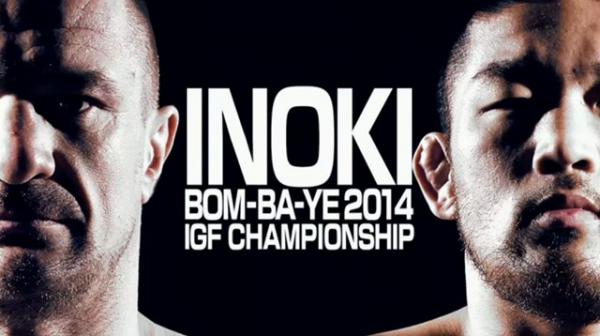
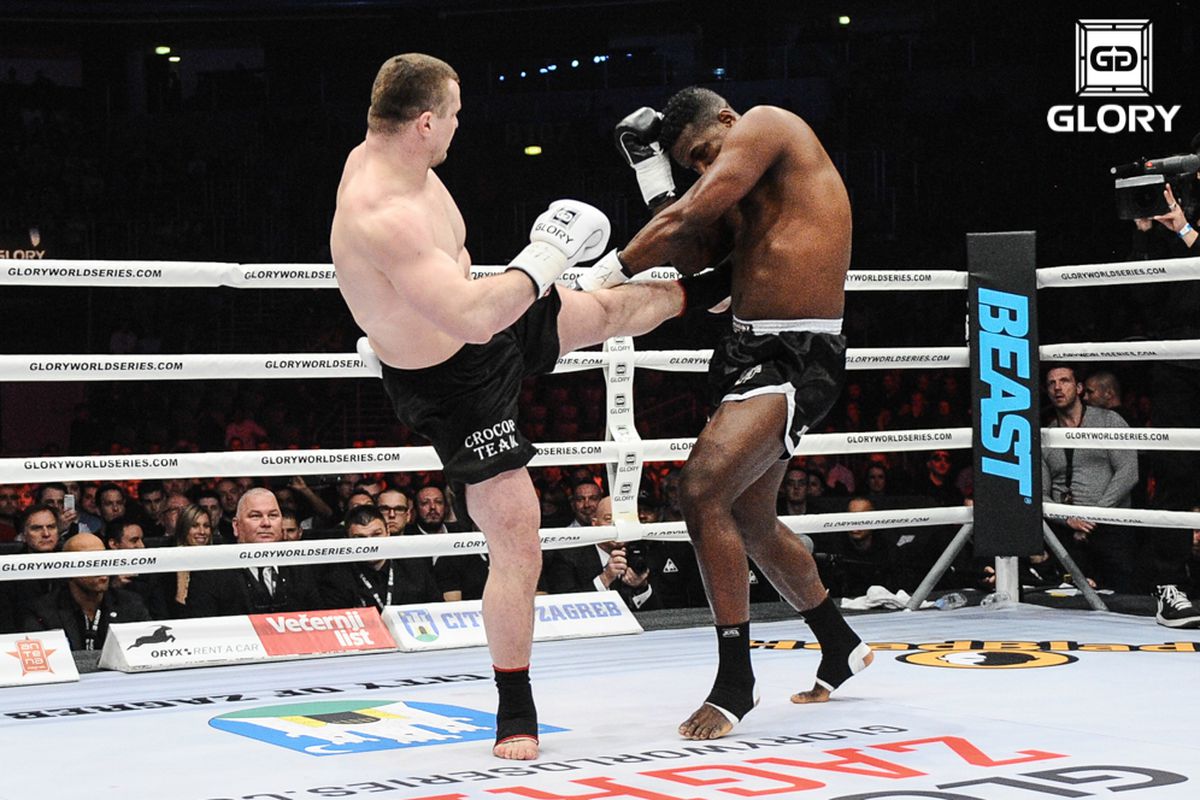
There were a handful of events in Japan today, with the bigger ones being run by DEEP and Inoki Genome Federation. IGF featured the bigger names like Cro Cop, Satoshi Ishii, Shinya Aoki, Josh Barnett (pro wrestling, not MMA) and even hosting Fedor Emelianenko and Wanderlei Silva as special guests. The story coming away from the event is that Mirko Cro Cop finished Satoshi Ishii with a left head kick to knock him off balance then following up with a flurry of punches to put him down and out.
This means that Mirko Cro Cop begins 2015 by holding onto the IGF World Championship.
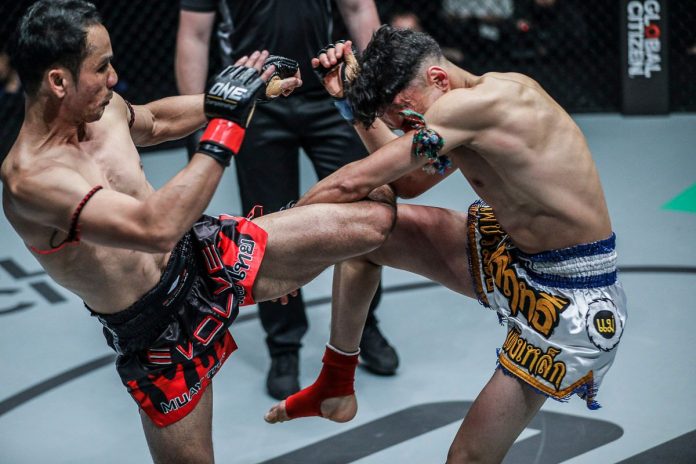
ONE Championship have only had a few events featuring the ONE SuperSeries kickboxing and muay thai bouts thus far but have produced some incredible action and buzz in the span of just a few months. On June 23rd they’ll return with another mostly-MMA card featuring a few, key ONE SuperSeries fights in Macau. As we’ve seen with prior ONE Championship events the SuperSeries will be featured prominently on the main card with two bouts to take place inside of the ONE cage, while one fight is relegated to the prelims, also in the cage.
On the main card there are two muay thai bouts in the ONE Championship SuperSeries, including Petchmorrakot vs. Fabrice Fairtex DeLannon at 67kg, with the big attraction for many being the flyweight bout between Lerdsilla and Sok Thy, with Lerdsilla known the world over as one of the most exciting muay thai practitioners in the world. Expect fireworks in all of these fights, of course, as the ONE SuperSeries fights that happen within the cage tend to be quick, a bit violent and a lot of fun.
Rui Bothelo takes on Yukinori Ogasawara on the prelims to round out the SuperSeries offerings.
ONE Championship will return with more SuperSeries action in short order on June 29th with Spirit of a Warrior, which will feature three more muay thai bouts.
ONE Championship: Pinnacle of Power
Main Card Muay Thai 67kg: Petchmorrakot Wor. Sangprapi vs. Fabrice Fairtex DeLannon Muay Thai Flyweight: Lerdsilla Phuket Top Team vs. Sok Thy
Prelims Muay Thai Flyweight: Rui Bothelo vs. Yukinori Ogasawara
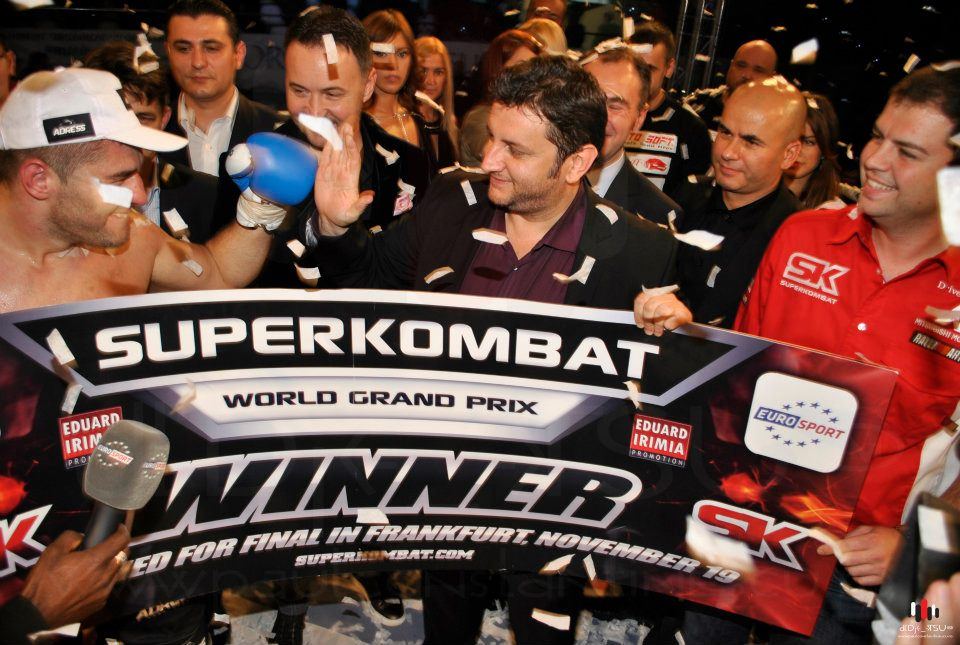
With all the hubub about GLORY’s R2G shows and the upcoming events in London, Istanbul, and Milan, Superkombat has been flying quietly under the radar.
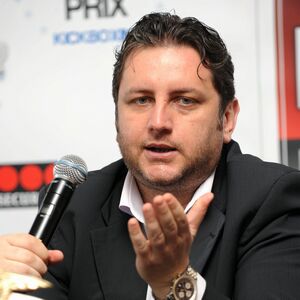
One of the two major kickboxing organizations in the world today, Superkombat is currently home to the likes of Catalin Morosanu, Raul Catinas, the Stoica brothers, Sergei Laschenko and more. The President of Superkombat, Eduard Irimia, made waves in the kickboxing world earlier this year when he announced his plan for global expansion, which involved the opening of Superkombat branches across the world, collaborations with regional fighters, managers, and gyms, and a partnership with K-1 and WAKO.
You might already know that this year Superkombat has begun holding tryouts in a variety of countries, including Greece, Germany, and the U.K, in an effort to groom a “new generation” of kickboxing. We caught up with Eduard to discuss his plans for Superkombat’s future in 2013 and beyond.
Read more for the full interview
Liverkick: The Superkombat tryouts in Athens, Dortmund, and London took place earlier this month. Could you talk a little about your thought process behind having them now?
Eduard Irimia: When I first created Local Kombat in 2003, we had tryouts on a national scale. It was at these tryouts we discovered no-name fighters that would go on to compete in our early shows. In a very short amount of time, we were getting huge ratings on Pro TV and the fighters that started without names became very well known on the pilot editions of Superkombat. We’re using that same premise now, except on a global scale. I don’t believe in cards featuring only famous veterans at the end of their careers. For the long term platform we need to groom new faces from a variety of different countries. This is especially important because our product is now being broadcasted in 4 continents, and the fans in those countries want to see themselves represented in the ring.
Liverkick: What do you think of the talent you’ve seen so far?
Eduard Irimia: It’s been very interesting to see how the new faces looked against some of our more experienced fighters. For example, the heavyweight we selected from Germany sparred with Toktasnyov and Liedert, who have both participated in past Superkombat events. This was a good gauge of his skill, and I believe he has a chance to do well in SK with proper preparation.
We’ve found a lot of good fighters at middle-weight and some skilled heavyweights. As long as we’re able to locate talent, we’d like to begin promoting more weight divisions.
Liverkick: When will we get to see some of the recruits in the ring?
Eduard Irimia: The idea for this year is that the new fighters we’ve selected will compete in elimination events called SUPERKOMBAT HEROES. After this they’ll be paired to face veterans so that we’ll be able to see who has the potential to be a SK star in the future.
Liverkick: You’ve still got 7 tryouts scheduled to take place before May. How many more fighters are you looking to add to the Superkombatroster?
Eduard Irimia: We’re still preparing tryouts at other locations, but we’d like to add approximately 64 new fighters. Like I said earlier, these 64 fighters will face each at our HEROES events to determine who has the potential to compete in our World Grand Prix.
Liverkick: I noticed there were women participating in the Athens tryouts. Is female kickboxing going to become a mainstay of Superkombat?
Eduard Irimia: In some of the countries we’ve been to, the local media reacted very well to seeing women at the tryouts. Because of the good feedback, we do plan to include female kickboxers in some way.
Liverkick: 2013 looks like it’s shaping up to be a big year. Could you give us any details about the events you’ve planned so far?
Eduard Irimia: Besides the tryouts, we’ll have six HEROES events that will be broadcasted around the world from regional TV and tape delayed on Eurosport. We’ll also be hosting our premium events under the WGP which will include 4 elimination events, 1 final elimination, and the big final at the end of the year, which will be shown live on Eurosport international and Eurosport Asia Pacific. We’ll also be working with television stations in North America, South America, Asia, Africa, and Australia.
Besides that we will improve live streaming via smart phones, and put out a free smart phone app for all Superkombat fans around the world.
Liverkick: You’ve said before that one of your goals is to create a new generation of stars. Could you talk about how you’re going to attract fans using so many new faces?
Eduard Irimia: This is my speciality- creating heroes and making them famous. To do that we’ll be using the media to create mainstream exposure. Not just sports media, either. Catalin Morosanu is the winner of Romania’s Dancing with the Stars and some advertising agencies are using his image in national branding campaigns. This is the type of thing I mean. We are trying to attract not only fight fans but the general public as well, which could increase our rating by 10 or 100 times if we are successful. We want to make our stars accessible to the average person.
This will be a difficult task, but it’s my main goal. We already succeeded in Romania where our product is now as big as football. If we are able to replicate this feat in a minimum of five other countries, I think it would be a huge success.
Liverkick: With all these developments it’s pretty clear things are really starting to pick up speed, not just for SK but for the sport as a whole. Where do you see your organization in 2014?
Eduard Irimia: Well, 2014 is really going to show the reality of how far the kickboxing market can reach, who can survive and who can’t in this business. I can personally say that some of the big projects started by others for next year might never come into being.
Superkombat has a decent budget and we pay out reasonable, but not huge, fight purses. In the short term, I believe we are the most stable organization around right now. I started Local Kombat in 2003, and changed the brand name to Superkombat in 2010. We’ve had ten years of steady growth and development, unlike some other companies who have quit and are trying to come back, or are re-inventing themselves with a huge budget that’s impossible to cover in today’s fight market.
Last year we began working on agreements with some different organizations, but we realized it was better for us to be independent. We can guarantee high quality work rather than risk being associated with the failure of others.
This year we will be supporting all organizations if they need our help. We will not be part of any sort of war or controversial dispute. I’d like to think that our fighters will be available for all the big promotions on the market, but will still compete for their original home: Superkombat.
Liverkick: Thank you Eduard. As always, it’s a pleasure.
It is finally upon us — the time for the K-1 World Grand Prix to go down. You can purchase your live stream at K-1’s site for $20 and it starts at 3PM Eastern Time (in under an hour). All of the fighters have made weight and are ready to go. The Finals look like this;
Reserve: Sergeii Laschenko vs. Dzevad Poturak – The first round was a close one, with both fighters being quite even, but Poturak landing the cleaner shots. The second round is more of the same with Laschenko starting to gas out and Poturak getting off some more clean shots, not doing much damage, but winning. Round 3 saw Poturak control the fight even more, he ran away with this one.
Winner: Dzevad Poturak
Catalin Morosanu vs. Pavel Zhuravlev – Morosanu comes in like Morosanu with crazy hooks, very aggressive. Zhuravlev is able to weather most of the storm without much damage. Second round sees a lot of the same, but Zhuravlev is able to catch Morosanu a few times and opens up a cut above the eye. Round 3 sees a lot of the same, with Morosanu being a little more tentative and picking his shots. Not a pretty fight. Zhuravlev was landing the cleaner shots.
Winner: Pavel Zhuravlev
Mirko Cro Cop vs. Jarrell Miller – Tough first round for both guys. Cro Cop went for some of his patented kicks, but they were all blocked. Miller worked some leg kicks and landed some decent punches from the clinch. Second round was all Miller with clinch knees and uppercuts. Cro Cop is gassing out, but, this is Croatia. Third round is more of the same, Miller landing the cleaner shots and being the clear aggressor. Annnnd Croatian judges give the fight to Cro Cop.
Winner: Mirko Cro Cop
Badr Hari vs. Zabit Samedov – Badr looks calm and collected, drops Samedov early. He lands a low blow and Samedov looks dead. Literally something happened at the end of the round and no one knows what, but Samedov had Hari rocked, there was no count and Hari kind of dropped Samedov but it didn’t count? I don’t know. Samedov landed some big bombs, Badr got a counter. Badr got a bit of a rest for a bloody nose, I don’t even know. Hari with an assault on Samedov in R3 but jumps on him instead, then he hits him a few more times and the ref calls the count. Badr then runs away the rest of the round while Samedov taunts him to hit him. Just a weird, surreal fight.
Winner: Badr Hari
Ismael Londt vs. Hesdy Gerges – Londt went full force with Hesdy defending as well as he always does. One would guess his tactic was to let Londt gas. Londt slows down a bit in Round 2, Hesdy starts opening up a bit more, but Londt still controlling the ring. Londt continues to swarm Hesdy and lands a flying knee that breaks Hesdy’s nose and Hesdy calls the fight.
Winner: Ismael Londt
Xi Chuang def. Samo Petje – Entertaining scrap, absolutely the best fight of the event thus far.
Emil Zoraj def. Giannis Sofokleus – Well, this was an interesting fight. Giannis took the fight on something like 12 hours notice and still really took it to Emil, but Emil was able to edge him out in the end.
Semi-Finals: Pavel Zhuravlev vs. Mirko Cro Cop – Missed most of this as the stream went down. The PPV went down as well, that is, the PPV never worked and everyone was accessing it for free so K-1 shut it down. Even those who paid can’t figure out how to get it to work. Cro Cop won.
Winner: Mirko Cro Cop
An announcement is made that Badr Hari has broken his foot and will be replaced by Dzevad Poturak. Poturak is not in the arena, though, so they need to push one of the Superfights up to give them time to tell him.
Jason Wilnis def. Toni Milanovic – Wilnis looked great, demolished Milanovic in the first round, big knockout.
Semi-Finals: Dzevad Poturak vs. Ismael Londt – Londt looked great but Poturak held his own. Poturak fought well but a kick to the midsection broke his rib and he calls it quits in the second round.
Winner: Ismael Londt
Agron Preteni def. Andrei Stoica – This fight was all Stoica, at least it should have been, until Preteni dropped him and really turned the tide of the fight. From that point on it was Preteni’s fight.
Mladen Brestovic def. Frank Munoz – Tough fight for Munoz who really just seems to not be able to find the right weight class. Brestovic was simply the better man tonight.
K-1 World Grand Prix Finals: Mirko Cro Cop vs. Ismael Londt – Londt was controlling things early on, but a left high kick knockdown in R2 by Cro Cop sealed the victory for him.
The past few days there has been a rush of K-1 news, as the mysterious Mr. Kim has revealed himself as the head of a Chinese-based company called EMCOM, and it appears that he has finally gone through and purchased something and that whatever it is will be called K-1. The details were still foggy at best, as LiverKick had heard from a number of sources that there have been “K-1 Global Holdings Limited” fighter contracts circulating amongst fighters, but it was no clear exactly who was at the helm in regards to those contracts.
According to Ghita, he signed a contract with K-1, today, that was a new, long-term contract. On top of that, if you will remember back to October when there was a rumor circulating that there was an offer extended to fighters to where they would be paid 50% of the money that was owed to them to sign a new contract with K-1, it appears that same offer was in effect with these new contracts. Daniel Ghita is under the international management of Simon Rutz and It’s Showtime/Black Label Fighters, which means that his international bookings are all handled by Mr. Rutz much like Giorgio Petrosyan’s were. Seeing as though EMCOM’s purchase of K-1 was announced just days ago and that Ghita was offered a contract almost immediately, it feels safe to say that being associated with Simon Rutz at this point will mean that you are in turn associated with EMCOM’s K-1 Global Holdings Limited. It should also be noted that this 50% deal is not a great deal by any stretch of the imagination, and the Golden Glory fighters who signed contracts with TSA were paid, in full, for money owed to them by FEG.
If you go ahead and read the interview, what is also clear is that Golden Glory fighters are in a strange place, and that it doesn’t appear like Ghita was approached about the Glory World Series tournament, or if he was, it was through Simon Rutz who has not discussed it with Ghita. On top of that, Gokhan Saki pulling out of a fight offer does not at all sound like Gokhan Saki at all, and sounds more like political turmoil between Golden Glory and It’s Showtime, which has been coming to a head for what feels like an eternity now, but has just been over the past year or so. I’m not sure if Simon Rutz is affiliated with EMCOM in any way, but it is clear that there is a strong, working relationship and that this relationship might not extend to Golden Glory.
The reality of Golden Glory and It’s Showtime not getting along and this K-1 deal could mean a lot of things, and if it plays out as I am imagining that it will, this will mean a very fragmented Kickboxing world with two strong factions and the best fighters not fighting each other, which none of us want. The K-1 World Grand Prix would not be the same without Errol Zimmerman, Gokhan Saki or Semmy Schilt, just like the K-1 World MAX tournament without Robin van Roosmalen would not make sense. On the other hand, the Glory World series would not feel as important without Hesdy Gerges and Daniel Ghita. For the sake of the fans, the fighters and everyone, let us hope that everyone can get along.
Yes, it is that time yet again for live results. This time feels a bit special as this is the first time in two years now that we will be seeing a K-1 Heavyweight tournament event originating live in Japan. It is airing on Ustream/Spike TV’s website for free. Yes, for free. Follow us on Twitter as well (@LiverKickdotcom and @RianScalia).
Stay tuned to LiverKick for live results.
Super Fights:
Zhou Zhi Peng (R2 – TKO) Koutaro Mori – Zhou simply applied too much pressure and used his hands effectively against Mori, who was working his kicks.
James Wilson (R3 – Draw) Rick Roufus – Absolute garbage decision here. Roufus outclassed the larger fighter by controlling the ring and landing kicks. Originally announced an extension round, and then said no extra round, just a draw. Weird.
Benjamin Adegbuyi (R1 – TKO [Injury]) Jafar Ahmadi – Decent bit of a fight, then Ahmadi’s hand came down onto Benny’s leg and apparently broke his hand. He shook his hand in the corner and took a 10 count.
Pavel Zhuravlev (R3 – Dec.) Saulo Calavari – Good back-and-forth with Saulo showing flashes of brilliance, but was simply outclassed by Pavel. Oddly enough, they listed Pavel as being from Russia, not the Ukraine.
Changhyun Lee (R3 – Dec.) Genji Umeno – Amazing, amazing fight. Just go and watch this one, I don’t feel like I can do it justice right now.
Final 16:
Ben Edwards (R2 – KO) Raul Catinas – Both men were looking to murder the other in round 1, but between rounds it became clear that Catinas was completely gassed out. Edwards slugged Catinas out and then pushed him over for the ref to count him down.
Jarrell Miller (R3 – Dec.) Arnold Oborotov – This was kicks vs. punches and Jarrell’s punches put Oborotov down in R1. Round 2 saw Oborotov look a bit better, but round three was all Miller.
Zabit Samedov (R1 – KO) Xavier Vigney – This fight was brutal. Samedov is a seasoned veteran and Xavier Vigney is fresh out of high school with one professional fight under his belt. It felt irresponsible of K-1 to put Vigney in a position like this. After Vigney was hit once he fell apart and went down three times, his corner throwing in the towel right before the third.
Hesdy Gerges (R3 – Dec.) Sergei Lascenko – This fight was exactly what you’d expect of it. Hesdy is the easy favorite for the whole tournament now.
Ismael Londt (R3 – Dec.) Singh Jaideep – This fight was also exactly what you’d expect of it. Londt gassed out, Jaideep hit like he was trying not to break an egg.
Makoto Uehara (R3 – Dec.) Hiromi Amada – Yeah.
Catalin Morosanu (R3 – Dec.) Paul Slowinski – Slowinski looked good early on, but Morosanu kept throwing bombs until they did him favors in round 3. Two knockdowns in R3 told the story.
Mirko Cro Cop (R3 – Dec.) Randy Blake – Randy Blake simply had no answer for Cro Cop and was connecting here and there, but proved to not have the power to make a difference. Late in the third Randy sucker punched Cro Cop, which sadly for him, did little damage. Cro Cop walks away with the win.
K-1 announced today that they have entered an agreement with SuperKombat. SuperKombat will now be assisting K-1 with format and production of events this year. They will also be helping K-1 to secure European talent.
With the new ownership of K-1 being new to running events, they’ve gotten some help in the form of a stable promotion in SuperKombat that has been built up by its owner, Eduard Irimia. Irimia has experience promoting events around Europe, with tons of experience in the production department, along with many connections throughout the kickboxing world. Full press release below:
Los Angeles, CA – K-1, the world’s premier kickboxing organization, today announced an agreement with the European leader in combat sports production, Superkombat WGP, and that both companies will work together in the development of K-1’s live event production.
“I am pleased to have an industry leader like SuperKombat WGP supporting K-1,” said Doug Kaplan, CEO, K-1. “SuperKombat WGP and the company president Eduard Irimia believe in the strength of K-1. We are fortunate to have them on board as we expand globally and build the next generation of warriors in the sport.”
Superkombat WGP is the industry leader in fight production throughout Europe. The company currently produces live combat sports events in 75 countries across four continents. Irimia and his team will work closely with K-1 in the format and production of its 2012 series of live arena events in America, Greece and Japan. SuperKombat WGP will also assist K-1 in securing the biggest and best new kickboxing talent coming out of Europe.
“I am honored that Superkombat WGP will be working closely with K-1 to present the absolute best technology in live television production today,” said Irimia. “I am excited that K-1 has finally returned. SuperKombat WGP will help K-1 in every possible way to once again become a giant in combat sports.”
K-1’s next event is the U.S. Grand Prix Championships live from the LA Sports Arena in Los Angeles, California on Saturday, Sept. 8. The all-star line-up of heavyweight fights include: Mighty Mo vs. Rick Roufus, Seth Petruzelli vs. Xavier Vigney, Dewey Cooper vs. Randy Blake, and Jarrell Miller vs. Jack May. Also, the K-1 MAX (Middleweight) fights include: Chaz Mulkey vs. Kit Cope, Michael Mananquil vs. Scotty Leffler, Bryce Krause vs. Justin Greskiewicz and Ben Yelle vs. Joey Pagliuso. Superfights include: Lerdsilla Chumpairtour vs. Gabriel Varga, Andy Howson vs. Romie Adanza, Justin Buchholz vs. Zhipeng Zhou and Markhaile Wedderburn vs. Jeremiah Metcalf. Tickets for the K-1 Rising U.S. World Grand Prix Championships on Saturday, September 8 are available for purchase through www.ticketmaster.com, or by calling Ticketmaster at 1-866-448-7849.
Tickets are also available at the LA Sports Arena Box Office located at 3939 S. Figueroa Street in Los Angeles or by calling (213) 748-6131.About K-1K-1 is the largest kickboxing promotion in history. Since 1993, K-1 has presented professional live martial arts events in 38 countries featuring the best and most accomplished athletes in the sport.World Grand Prix Champions of K-1 include Alistair Overeem, Mark Hunt, Ernesto Hoost, Peter Aerts, Remy Bonjasky and Semmy Schilt.K-1 has held broadcast deals with ESPN and HDNet in the United States, Fuji TV in Japan, and numerous other networks across the globe. K-1 returned to the world stage on May 26, 2012 in Madrid, Spain drawing a packed stadium and hundreds of thousands of views on the K-1 Live Stream.
Yep, although it might not seem like it, there’s a K-1 event this weekend in Tokyo, Japan and it features the Final 16 of the Heavyweight World Grand Prix along with four super fights.
The Final 16 match-ups consists of eight fights. Among three of the competitors, Randy Blake, Jarrell Miller and Xavier Vigney qualified for the Final 16 after winning fights last month at K-1 in Los Angeles.
As far as the LiverKick rankings go, two fighters from our heavyweight rankings are on the show and in the Final 16, in Sergei Lascenko at #6 and Hesdy Gerges at #10 and strangely enough, they’re fighting each other.
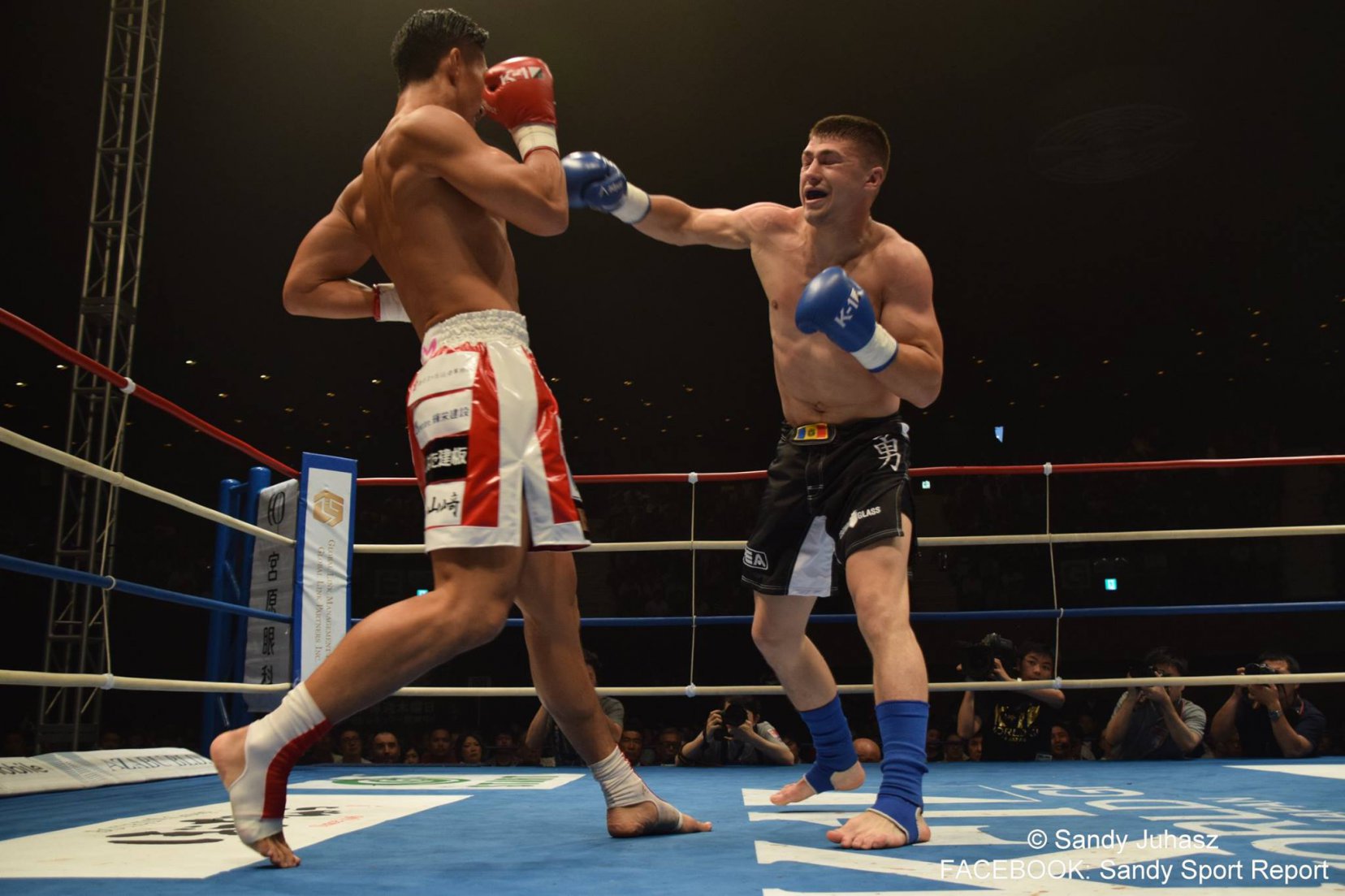
Every single fight is a heavyweight fight except for two, in Genji Umeno vs. Chanhyung Lee and Koutaro Mori vs. Zhou Zhi Peng. Although K-1 hasn’t even listed a weight for the Umeno fight, it’s probably at their 59kg weight class and if not, somewhere around there. Mori vs. Peng is at 70kg.